Radon Testing in the Quad Cities
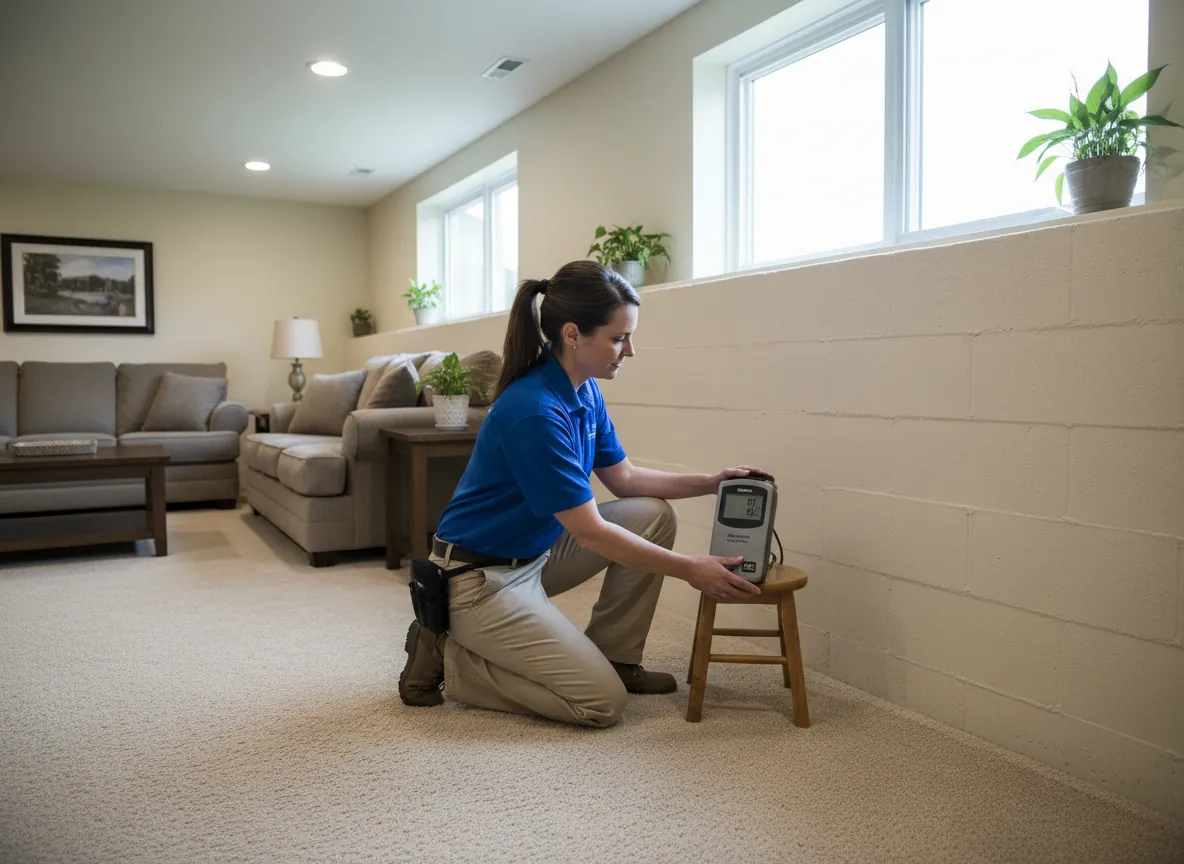
Professional radon testing for homes, home purchases, rentals, and other buildings in Davenport, Bettendorf, Moline, Rock Island, East Moline, Silvis, Milan, Eldridge, LeClaire, and surrounding Quad Cities communities.
Radon is one of those problems that can exist in a house without giving you anything obvious to look for. There is no smell, color, or visible warning that tells you a home has elevated radon. Testing is how you find out what the indoor level actually is. Iowa's Department of Health and Human Services and local public-health agencies recommend testing because measurement is the only practical way to know a home's radon level.
Radon Testing for Homeowners Who Want an Answer
A radon test should answer a straightforward question: what level of radon is present in this building under the conditions of the test? The answer can be important whether you have lived in the house for years, just bought it, are preparing to sell it, are finishing a basement, or are considering whether an existing mitigation system is still doing its job.
The Quad Cities crosses the Iowa-Illinois state line. Davenport and Bettendorf sit on the Iowa side while Moline, Rock Island, East Moline, Silvis, and Milan are in Illinois. A homeowner may hear different advice from a home inspector, real-estate agent, county health department, or contractor depending on which side of the Mississippi River the property sits. A good testing process starts with the property, the reason for testing, the type of building, and the applicable state requirements rather than assuming every test is interchangeable.
When Should You Test for Radon?
- You have never tested the home or do not know when it was last tested.
- You are buying or selling a home and need a current measurement.
- You are moving into a home with a basement, crawl space, or lower-level living area.
- You have finished or remodeled a basement or changed how a lower level is used.
- An older radon result is no longer representative of the property.
- A previous test was elevated and you need confirmation or follow-up.
- A mitigation system has been installed, repaired, or had its fan replaced and you need a post-work measurement.
- You own a rental, multifamily property, commercial building, school, daycare, or other occupied building where radon testing is appropriate.
For home buyers, timing matters. Radon testing is often added during the inspection or due-diligence period because a result can affect what questions the buyer asks before closing. Consumers commonly ask whether testing should be part of the inspection, whether a DIY kit is enough for a transaction, how quickly results can be obtained, and what happens if the result is elevated.
Short-Term Radon Testing
Short-term testing is commonly used when a homeowner needs an answer within days rather than months. Depending on the device and testing purpose, short-term tests can run for a period of at least two days and up to 90 days. The device instructions and applicable testing requirements matter, so the test should not simply be placed anywhere convenient and interpreted without considering how it was conducted.
For a short-term test, closed-building conditions are particularly important. Exterior doors and windows should be managed according to the applicable instructions, with normal entry and exit rather than intentionally ventilating the building. A homeowner who leaves basement windows open, props an exterior door, or otherwise changes normal conditions can create a result that does not represent the conditions the test was intended to measure.
Long-Term Radon Testing
Long-term testing generally runs for more than 90 days and can provide a longer picture of the home's radon exposure. It may make sense when there is no immediate real-estate deadline and the homeowner wants a measurement that covers a broader period of changing conditions. Short-term and long-term testing are not simply competing products; the appropriate approach depends on why the property is being tested and what decision the result will support.
Where Should a Radon Test Be Placed?
The testing location matters. EPA guidance generally focuses on the lowest level that is regularly occupied or could reasonably become occupied, while the exact placement depends on the purpose of the test and the building. A finished basement used as living space is different from an unfinished crawl space, an attached garage, or a utility room. Testing should also avoid locations where the detector could be disturbed or exposed to unusual drafts, heat, moisture, or other conditions that could interfere with the measurement.
This is one reason professional testing can be useful when the result is going to be used for a home purchase, sale, mitigation decision, or other important property decision. The question is not merely whether a detector can be placed in the house. The question is whether the measurement was performed in the right place and under appropriate conditions for the decision you are trying to make.
What Does a Radon Result Mean?
Radon results are commonly reported in picocuries per liter, or pCi/L. The EPA action level is 4.0 pCi/L. EPA recommends taking action to reduce radon at 4 pCi/L or higher and considering reduction when the result is between 2 and 4 pCi/L. A result is not a simple pass/fail label, however. The test type, test conditions, building, and reason for testing all matter when deciding what to do next.
If a result is elevated, do not panic and do not assume that one number automatically tells you the entire story. Depending on the situation, the next step may be a second measurement, a professional evaluation, or mitigation. Iowa HHS notes that mitigation decisions should not be based on a single test result alone.
Professional Testing vs. DIY Radon Test Kits
DIY radon kits are widely available, including through public-health programs and laboratories. They can be an accessible way for a homeowner to screen a property. Professional testing becomes particularly useful when the result needs to support a real-estate transaction, when the property has an unusual layout, when testing conditions need careful attention, or when you want someone to explain the result and the possible next step.
Home-buying discussions repeatedly raise this exact decision: whether to add radon testing to a home inspection, whether a lower-cost kit is sufficient, how quickly a test can be completed, and whether an elevated result can be used when negotiating with a seller. Those are practical questions worth answering before the testing deadline rather than after it.
Radon Testing During a Home Purchase
If you are buying a home in Davenport, Bettendorf, Moline, Rock Island, or another Quad Cities community, radon testing can be performed as part of the property's due-diligence process. Arrange the test early enough that the testing period and reporting time fit within the inspection or contingency period.
A high result does not automatically mean you should abandon a property. Buyers commonly use the result to ask for additional testing, obtain a mitigation estimate, request a repair or credit, or understand what work may be required after closing. The important first step is obtaining a reliable measurement so the discussion is based on evidence rather than assumptions.
Testing After Radon Mitigation
Testing should not stop when a mitigation fan is installed. A post-mitigation test helps determine whether the completed system actually reduced the indoor radon level. EPA recommends retesting after mitigation and periodically afterward to verify that levels remain reduced. If the result remains elevated, the system may need further evaluation rather than simply assuming the equipment is working because the fan is running.
Radon Testing for Basements, Crawl Spaces and Different Foundations
Foundation type changes the way a property should be evaluated. Homes with full basements, partial basements, crawl spaces, walkout basements, and slab-on-grade construction do not all have the same lower-level configuration. The test location should reflect the part of the building where people spend time and the reason for the test.
A finished basement used as a family room or bedroom deserves particular attention because it is an occupied lower level. A crawl space may require a different evaluation, especially when the crawl space is connected to the living area. If you are unsure where the detector should go, describe the foundation and how the lower level is used when requesting service.
Testing for Rentals, Commercial Buildings and Other Properties
Radon testing is not limited to single-family houses. Testing can also be relevant to rental properties, multifamily buildings, commercial properties, schools, daycares, and other occupied structures. The testing plan for a larger building may involve multiple areas or testing locations and should be designed around how the building is occupied and what decision the testing is intended to support.
What If Your Radon Test Is High?
A high radon test gives you information you can act on. The next step may be to confirm the measurement, discuss the result with a qualified professional, evaluate the property, and determine whether a mitigation system is appropriate. Radon mitigation commonly involves collecting soil gas beneath the building and exhausting it outside, but system design depends on the structure.
If you already have a mitigation system, an elevated result can mean the system needs inspection rather than a completely new installation. Fan performance, piping, connections, building changes, and other conditions can affect performance. That is why testing and system evaluation work together.
Common Radon Testing Questions
How long does a radon test take?
Short-term testing commonly takes at least 48 hours, although the exact duration depends on the device and testing requirements. Long-term tests run for more than 90 days. If you are buying or selling, tell us about your deadline when requesting service so the testing approach can be matched to the transaction.
Should I test for radon if the house already passed a home inspection?
Yes, if radon was not separately measured. A general home inspection and a radon measurement answer different questions. Radon cannot be identified by looking at the house, so it requires a dedicated measurement.
Should I test for radon when buying a home?
Testing during the purchase process gives you information about the property before closing. It can also give you time to obtain additional information or a mitigation estimate if the result is elevated.
Can I use a cheap store-bought radon test?
Home test kits can be legitimate screening tools when used correctly, but the appropriate test depends on why you are testing. A professional measurement can be preferable for transactions, unusual properties, follow-up testing, or situations where you want help interpreting the process and result.
What if my radon result is between 2 and 4 pCi/L?
EPA recommends considering radon reduction in this range. The decision should account for the measurement, the building, and the homeowner's circumstances rather than treating the number as an absolute pass/fail line.
What if my radon result is 4 pCi/L or higher?
EPA recommends taking action to reduce radon at 4 pCi/L or higher. Depending on the situation, that can include confirming the result and then evaluating the property for mitigation.
Do I need another test after radon mitigation?
Yes. Post-mitigation testing is important because the goal is not simply to have a fan and pipe installed; the goal is to reduce the indoor radon level. Retesting verifies the result.
Does a newer home need radon testing?
Yes. New construction can incorporate radon-resistant features, but the completed home should still be tested to determine its actual indoor radon level.
Radon Testing Across the Quad Cities
We provide radon testing information and service for Davenport and Bettendorf on the Iowa side and Moline, Rock Island, East Moline, Silvis, Milan, and surrounding Illinois communities, along with Eldridge and LeClaire. The Quad Cities area includes a wide mix of older river-city housing, newer subdivisions, finished basements, walkout foundations, crawl spaces, and homes near the Mississippi River. That variety is one reason testing should be based on the actual property rather than assuming every house needs the same setup.
If you are near I-74, I-80, the Davenport riverfront, downtown Moline, Rock Island's older neighborhoods, Bettendorf's newer developments, or the smaller communities around Scott and Rock Island counties, tell us the property city and foundation type when you request testing. That gives us useful information before the appointment.
Request Radon Testing
If you need a radon test for your home, a home purchase, a sale, a rental property, or follow-up after mitigation, send the property city and a brief description of what you need. If you have an existing test result, include the result and test date.