Quad Cities Radon Mitigation
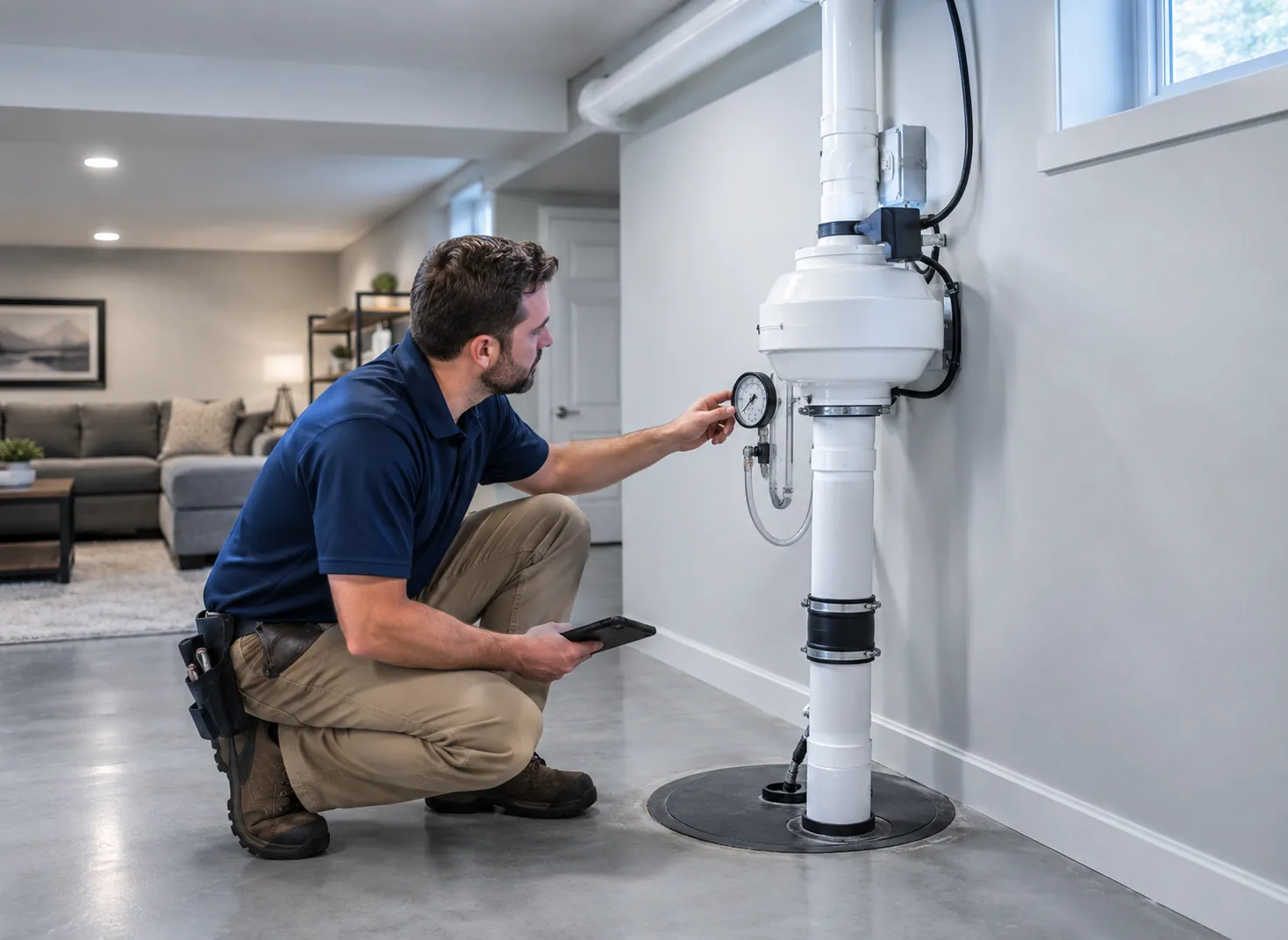
If a radon test shows elevated levels, radon mitigation is the process of reducing the amount of radon entering and accumulating inside the building. A properly planned system is based on the foundation, soil-gas entry points, existing drainage or piping, finished areas, and the way the building is used.
Radon mitigation is not simply putting a pipe through a wall and attaching a fan. The objective is to change the pressure conditions beneath or around the building so soil gas is collected and exhausted outdoors instead of entering occupied space. A mitigation project should begin with the building and end with follow-up testing that shows whether the system actually reduced the indoor level.
What Radon Mitigation Does
Most residential mitigation systems use some form of active soil depressurization. A suction point is connected to the area beneath a concrete slab, beneath a crawl-space membrane, or another appropriate collection area. A fan creates negative pressure and moves soil gas through piping to a discharge point outdoors.
Sealing cracks, openings, sump covers and other pathways can be part of a mitigation project, but sealing by itself is generally not the primary solution for an elevated radon level. The system needs to address how soil gas is being collected and removed. That is why the same pipe-and-fan design is not automatically appropriate for every house.
Radon Mitigation for Different Foundations
Basement and slab homes
Homes with basements or slabs commonly use sub-slab depressurization. The system draws soil gas from beneath the concrete and routes it through piping to an exterior exhaust point. A sump pit, drain tile system or another existing feature can sometimes be incorporated when appropriate.
Crawl-space homes
Crawl spaces require a different approach because there may not be a concrete slab that can simply be suctioned. A sealed membrane can be installed over the soil and connected to a sub-membrane depressurization system. Crawl-space condition, access, size and connection to the living area all affect the work.
Homes with more than one foundation type
A house with a basement addition, crawl space, slab section or multiple disconnected foundation areas can require more than one collection point. The system should address the portions of the building that need pressure reduction instead of assuming one suction point will cover every area.
Newer homes with passive radon piping
Some newer homes are constructed with passive radon-resistant piping already installed. If testing later shows elevated radon, that infrastructure may be able to be activated with a fan rather than starting with an entirely new pipe route. Existing piping should be inspected before assuming it is suitable for activation.
When Does a Home Need Radon Mitigation?
EPA recommends taking action to reduce radon when the measured level is 4 pCi/L or higher and considering reduction between 2 and 4 pCi/L. The measurement should be interpreted in the context of how the test was performed and why it was conducted. If a test is elevated, the practical next step is to discuss the result and the property rather than trying to design a mitigation system from the number alone.
Mitigation can also become relevant when a property already has a system but the radon level has risen. A system that once performed well may need evaluation because of fan failure, changes to the building, damaged piping, altered drainage, remodeling or another condition.
What Happens During a Radon Mitigation Project?
1. Review the radon test
The result, test duration, test location, date and type of test provide context. If there are multiple results, bring those as well. A pattern of results can be more useful than a single isolated number.
2. Evaluate the building
The foundation and lower level are examined to determine where soil gas may be entering and how the building is configured. Important details can include basement slabs, crawl spaces, sump pits, floor drains, block walls, interior drain tile, foundation separations and finished areas where exposed piping would matter.
3. Design the collection point or points
Some homes can be served by one suction point; others need additional points because of foundation size or disconnected sections. The design should account for the actual building rather than using a one-size-fits-all installation.
4. Plan the pipe route and fan location
Pipe routing matters both technically and aesthetically. A route may pass through a basement, utility area, garage, attic or exterior wall depending on the property. Homeowners should know where the finished pipe and fan will be located before work begins.
5. Install and monitor the system
Installation can involve drilling through concrete, installing suction points, connecting piping, sealing collection areas, installing the fan, routing the exhaust and adding a pressure indicator or other monitoring component. The exact work depends on the building.
6. Verify the result
A mitigation installation should be followed by radon testing to determine whether the indoor level has been reduced. The fan running is not the final measure of success; the indoor radon result tells you whether additional evaluation or system changes may be needed.
How Much Does Radon Mitigation Cost?
Cost depends heavily on the building. A straightforward basement or slab system can be in the low-thousands, while crawl-space encapsulation, multiple suction points, combination foundations or difficult pipe routes can push a project substantially higher. These are general market ranges, not a quote for a particular property.
When comparing quotes, ask whether the price includes the suction point, pipe, fan, exterior termination, system indicator, sealing, crawl-space membrane if required, post-mitigation testing, warranty and additional suction points. A low initial number can mean something different from a complete installed system.
Questions to Ask Before Hiring a Radon Mitigation Contractor
- What type of mitigation system does my foundation require?
- How many suction points does the building need?
- Where will the pipe run?
- Where will the fan be installed?
- Will the finished system be visible from outside?
- Does the price include a system monitor?
- What work is included if I have a crawl space?
- Is sealing included, and what openings are being addressed?
- Who performs the post-mitigation test?
- What happens if the post-installation result remains elevated?
- What warranty applies to the fan and workmanship?
Radon Mitigation for Home Buyers and Sellers
Radon mitigation frequently becomes a transaction issue. A buyer may receive an elevated test during the inspection period and need to understand the work before a deadline. A seller may already have a system and need current testing or documentation before listing. If you are under contract, provide the property location, result and inspection or closing timeline when requesting service.
Basement Radon Mitigation
Basements are common mitigation locations because the concrete slab is directly connected to the soil beneath the building. A finished basement also deserves careful attention to pipe placement. If the basement contains an interior drain tile system, sump pit, utility room or other below-slab features, those details should be considered before the system is designed.
Crawl Space Radon Mitigation
Crawl-space mitigation often involves a continuous membrane over exposed soil combined with suction beneath the membrane. The membrane needs to be appropriately sealed around walls, piers, penetrations and other interruptions. Large crawl spaces, low clearance and combination basement/crawl-space foundations can increase the complexity of the work.
Existing Radon System Evaluation
If your house already has radon piping and a fan, you may not need a completely new system. An inspection can look at the fan, pipe connections, suction point, system indicator, exhaust route and other visible components. If the fan has failed, replacement may restore the system. If the building has changed or the system is no longer reducing radon adequately, modifications may be necessary.
What Maintenance Does a Radon System Need?
Active radon systems use mechanical equipment and should not simply be forgotten after installation. Pay attention to the system's performance indicator, unusual fan noise, visible damage, changes to exterior piping and new building work that could affect the system. Periodic retesting helps verify that radon levels remain reduced.
Common Radon Mitigation Questions
Can radon be fixed permanently?
Mitigation can substantially reduce indoor radon, but the building should still be retested periodically. A mitigation system is equipment that needs to remain functional, and changes to the building can affect performance.
Will a mitigation system lower my home's value?
A properly installed mitigation system is intended to address an environmental condition. During a sale, buyers may ask about the system, testing results and maintenance. Clear documentation can make those questions easier to answer.
How long does installation take?
Many straightforward residential installations can be completed in a day, but the schedule depends on the foundation, number of suction points, crawl-space work, pipe route and repairs required before installation.
Does sealing the basement get rid of radon?
Sealing cracks and openings can be part of mitigation, but sealing alone is generally not the primary method for reducing an elevated radon level. A mitigation system usually addresses soil gas by collecting and exhausting it.
What if my radon level is still high after mitigation?
Retesting provides the evidence needed to decide what happens next. The system may need another suction point, a pressure or piping evaluation, additional sealing, crawl-space work or another design adjustment depending on the building.
Can a passive system be activated?
Sometimes. Existing passive piping should be inspected first to determine whether it is properly routed, connected, accessible and suitable for activation. If appropriate, adding an active fan can be simpler than installing a completely new system.
Do I need a test after installing the system?
Yes. Post-mitigation testing is how you determine whether the completed system actually reduced the indoor radon level.
Radon Mitigation Across the Quad Cities
The Quad Cities has a wide mix of housing. Older homes in Davenport and Rock Island can have masonry foundations, additions, basements or crawl spaces modified over decades. Bettendorf includes newer construction as well as established neighborhoods along the Mississippi River bluffs. Moline and East Moline have older housing, newer development and properties influenced by riverfront and industrial history. Silvis, Milan, Eldridge and LeClaire add still more variation in age and foundation design.
Whether the property is near the Mississippi River, I-74, I-80, downtown Davenport, downtown Moline, the Rock Island Arsenal area or another Quad Cities neighborhood, mitigation should be designed around the individual building.